Why Your Borehole Water Output Drops Over Time — And What Can Be Done About It
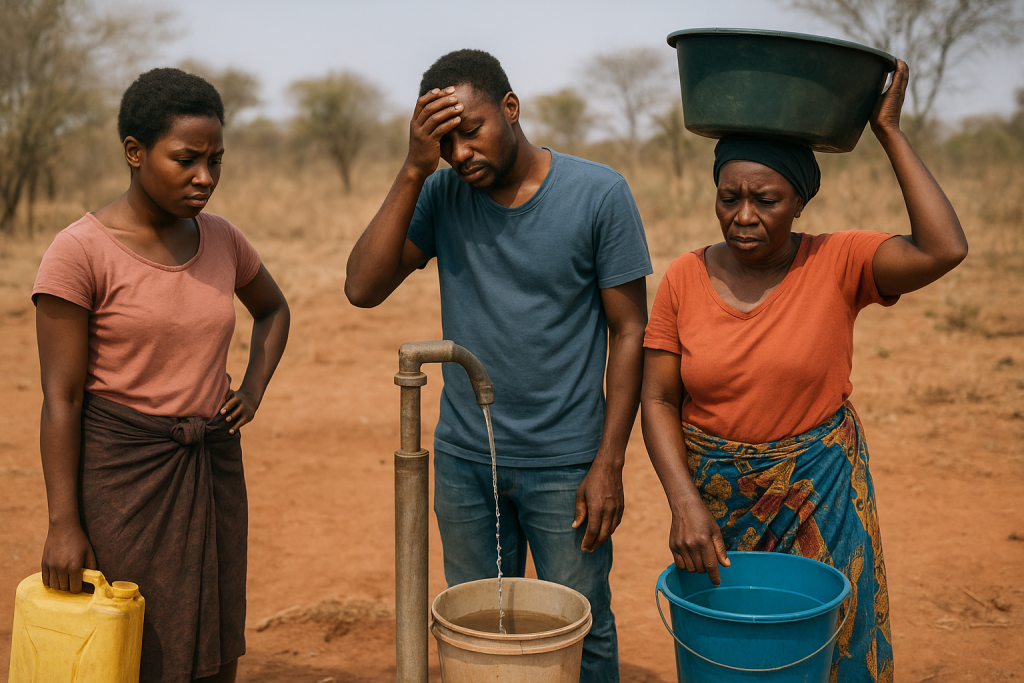
A borehole that once supplied reliable water can gradually begin producing less water over time. For many property owners, farms, and businesses in Zimbabwe, declining borehole performance creates immediate concern and often leads to one assumption: the borehole has failed.
However, low borehole yield does not always mean the water source is exhausted. In many cases, the issue can be diagnosed and corrected without drilling a completely new borehole.
Understanding why borehole output decreases is important before making expensive decisions.
What Causes Borehole Yield to Decline?
Several technical and environmental factors can reduce the amount of water a borehole produces.
1. Sediment and Silt Buildup
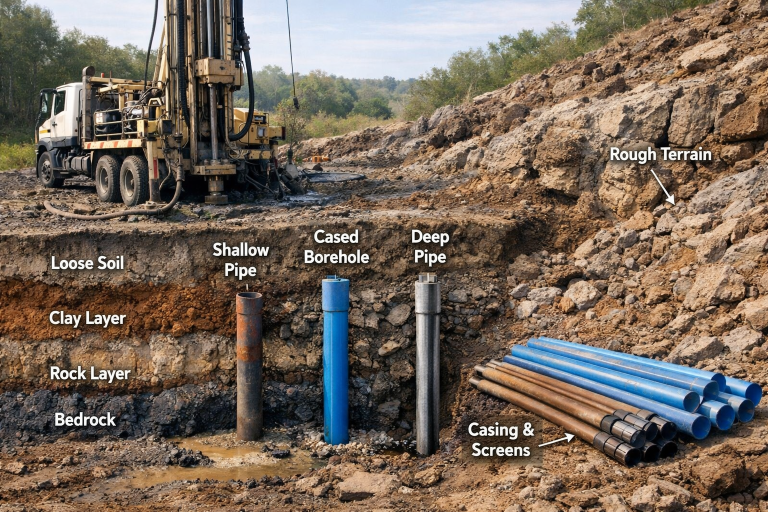
Over time, fine particles can accumulate inside the borehole and around the screen or casing. This restricts water flow into the borehole and reduces pumping efficiency.
Common signs include:
- Muddy or sandy water
- Reduced flow rate
- Pump strain or blockage
Professional flushing and cleaning can often restore normal performance.
2. Falling Water Tables
Groundwater levels naturally fluctuate due to:
- Seasonal rainfall changes
- Drought conditions
- Increased groundwater demand in surrounding areas
When water tables drop below the original pump setting or borehole depth, water output decreases significantly.
In some situations, deepening the borehole may help access lower aquifers with more reliable supply.
3. Increased Water Demand
A borehole designed for household use may later be expected to support:
- Irrigation systems
- Livestock
- Additional households
- Commercial operations
When demand increases beyond the borehole’s original capacity, the system may appear to underperform even though the borehole itself remains functional.
4. Pump and System Issues
Low yield is not always caused by the borehole itself. Faulty pumps, pipe leaks, damaged non-return valves, or electrical issues can also reduce water delivery.
This is why proper technical assessment is critical before deciding on major drilling work.
Why Immediate Re-Drilling Is Not Always the Best Solution
Many boreholes can be restored or improved through:
- Flushing and rehabilitation
- Deepening
- Pump replacement or repositioning
- System optimisation
Re-drilling without proper diagnosis may result in unnecessary costs while failing to address the actual issue.
A structured assessment helps identify the most cost-effective and technically appropriate solution.
The Importance of Professional Assessment
Boreholes are long-term infrastructure assets. Decisions involving groundwater systems should be based on technical evaluation rather than assumptions.
At Ragnarock Drilling, every low-yield investigation begins with understanding:
- Current borehole condition
- Water level behaviour
- Pump performance
- Geological factors
- Water demand requirements
This approach helps clients avoid unnecessary expenditure while improving long-term reliability.
Final Thoughts
Declining borehole performance is a common issue, but it does not always mean the borehole has failed permanently.
In many cases, the right intervention can restore water output and extend the lifespan of the system significantly.
Before investing in a new borehole, it is important to diagnose the real problem first.
For professional borehole assessment, rehabilitation, flushing, and drilling services across Zimbabwe, contact Ragnarock Drilling.
📞 +263 773 170 592
🌐 www.ragnarock.co.zw