Why Borehole Yield Drops Over Time — And What You Can Do About It
Many borehole owners in Zimbabwe experience a frustrating problem: a borehole that once delivered strong, reliable water slowly begins to underperform. Flow reduces, pumps struggle, and daily water needs are no longer met. This decline does not happen overnight, and it often has more than one cause.
Understanding why borehole yield drops over time is the first step toward protecting your investment and restoring your water supply.
1. Natural Changes in the Water Table
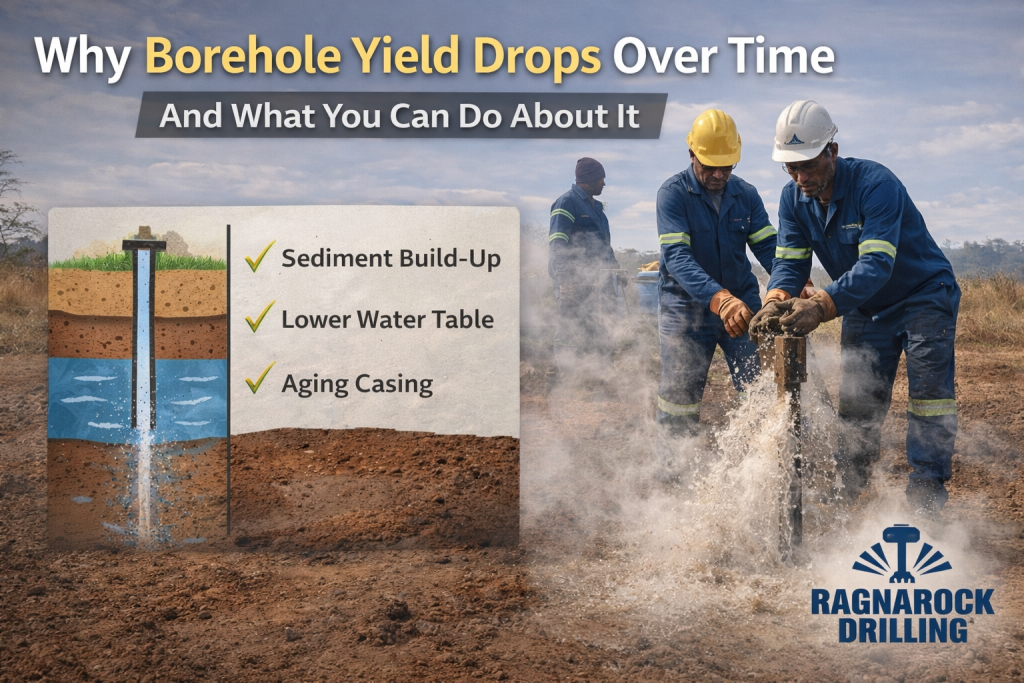
Groundwater levels are not static. Seasonal changes, prolonged droughts, and increased water extraction in surrounding areas can all lower the water table. When this happens, boreholes that were once well-positioned may no longer reach the most productive water-bearing zones.
This is especially common in areas experiencing population growth or expanding agricultural activity.
2. Sediment and Silt Accumulation
Over time, fine sand, clay, and silt can enter the borehole and settle around the casing and aquifer openings. This restricts water inflow and reduces yield. Sediment buildup is one of the most common reasons older boreholes lose performance.
Flushing is often an effective way to clear these blockages and restore water flow without drilling deeper.
3. Borehole Aging and Wear
Boreholes are exposed to constant water movement, pressure changes, and mechanical stress from pumps. Casings and screens can degrade, and flow paths may become less efficient. Without periodic maintenance, performance naturally declines.
4. Increased Demand on the Borehole
A borehole that once served a household may later be required to support gardens, livestock, or additional buildings. Increased demand can expose limitations that were not apparent when the borehole was first drilled.
What Can Be Done?
The right solution depends on the cause:
- Flushing may restore flow by removing sediment
- Deepening may reach a lower, more productive aquifer
- Operational changes may improve efficiency
At Ragnarock Drilling, we assess borehole conditions and diagnose the issue before recommending the best solution. While no intervention guarantees increased yield, informed decisions reduce unnecessary costs and risks.
Final Thoughts
A declining borehole does not automatically mean failure. With professional assessment and realistic expectations, many boreholes can continue serving properties for years to come.